

Why Are Online Investment Scams Easily Deceptive?
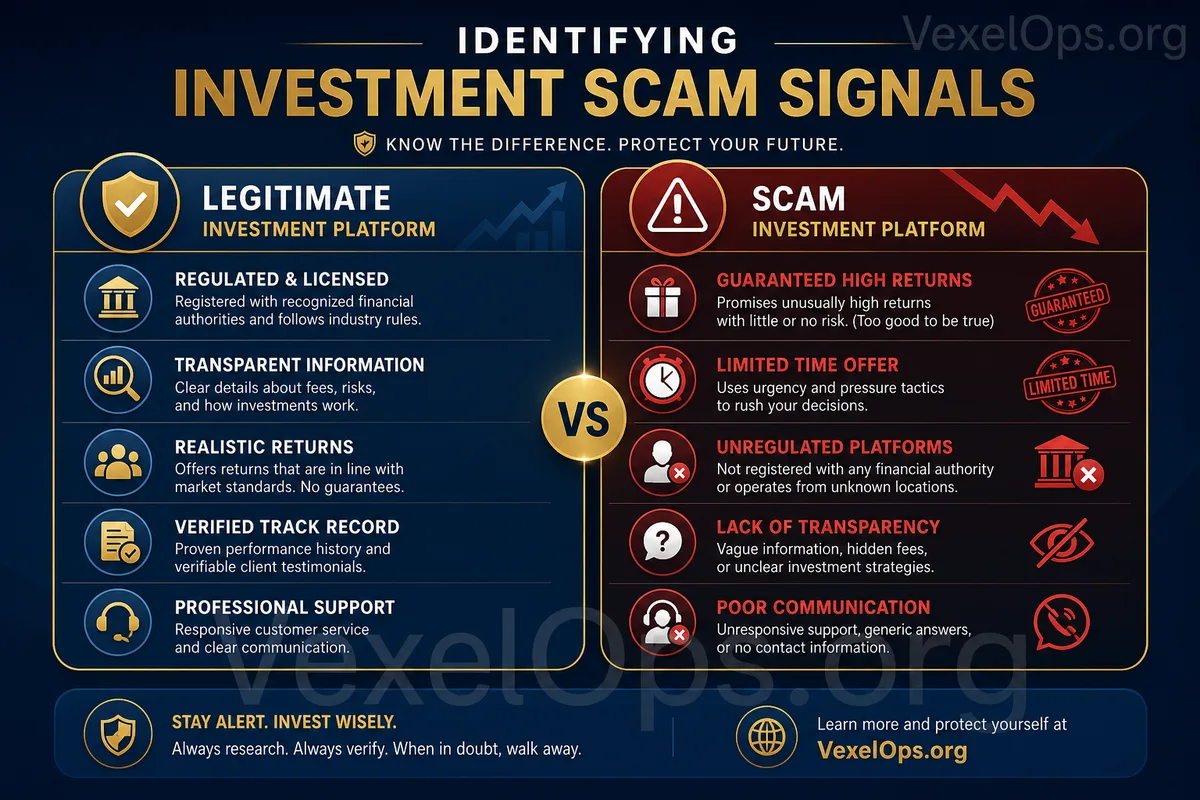
Online investment scams are common because they often do not appear suspicious initially. Many scams are packaged as professional investment opportunities, financial advisors, cryptocurrency platforms, stock communities, forex trading groups, or even impersonated success stories and user testimonials. For ordinary users, the most dangerous aspect is not misunderstanding investment tools, but being influenced by the trust and urgency created by the scammer's tactics. Scammers might use phrases like "stable returns," "teacher-led trades," "exclusive slots," "limited deposits," or "you'll miss out if you don't join today" to create a sense of rarity, reducing vigilance. What you need to remember is: every investment carries risks. Any emphasis on guaranteed profits, zero risks, high returns, along with requests for quick payments should be approached with caution.
Speech 1: Guaranteed Profits, Money-Making Without Loss
"Guaranteed profits" is an extremely common phrase in investment scams. The scammer might tell you that this system is already mature, the teacher is accurate, the platform has insider information, or that profits can be steadily increased every day. However, legitimate investments cannot be completely risk-free. Markets fluctuate, profits vary, and any responsible investment explanation should remind about risks rather than focusing solely on potential winnings. If the other party continually avoids discussing risks, only shows success screenshots, profit figures, or others’ earnings records, without clearly explaining the flow of funds, the platform's background, withdrawal rules, and sources of risk, you should be cautious.
Speech 2: Limited Slots, Pressuring You to Deposit Immediately
Scammers often create time pressure, such as "last slots available today," "only 10 spots open," "deposit now for bonuses," or "miss this wave and lose out." This tactic makes users feel the need to act immediately without time to verify. When ordinary users encounter such situations, they should pause. A truly trustworthy investment service should not fear you taking the time to understand, nor should it pressure you to transfer money or deposit quickly. If the other party persistently encourages you to make payments, even using tones of pressure, emotional manipulation, or suggesting that not joining means missing a wealth opportunity, these are usually high-risk signals.
Speech 3: Small Profits First, Then Requesting Larger Investments
Some investment scams won't ask for large amounts of capital upfront, but will first allow you to deposit small amounts and see profits on the platform. This can lead users to believe that the platform really makes money, prompting them to invest more. The problem is that these figures may just be fake data displayed by the platform's backend. When you want to withdraw, the scammer might demand that you pay taxes, deposits, unfreezing fees, risk control fees, or identity verification fees. If you continue to pay, it may lead to further losses.
Speech 4: Many in the Group Reporting Profits
Investment scams often establish social groups where many may share profit screenshots, thank their instructors, report successful withdrawals, or have daily "students" reporting earnings. This content can lead ordinary users to feel that many people are participating, thus lowering their suspicion. However, the members in the group may not all be real users. Some may be fake accounts arranged by the scam team, meant to create an atmosphere of success and trust. When you raise doubts, there may be others urging you not to miss the opportunity, or saying they didn't believe at first but later discovered that it was profitable. When encountering such groups, do not just look at others' chat records and screenshots. Screenshots can be fabricated, and group atmosphere can be staged. You need to check whether the platform is trustworthy, whether the funds are transparent, if withdrawals are normal, and whether the other party has clear legal information.
Speech 5: Requesting More Fees Before Withdrawal
Many victims realize problems only at the withdrawal stage. The platform might show you have made profits, but when you want to withdraw the money, the customer service might require you to first pay taxes, handling fees, deposits, risk unlock fees, or account verification fees. This is a very typical high-risk signal. The fee rules on a legitimate platform should be clear and transparent, and should not suddenly demand additional payments during withdrawals; it should especially not require you to transfer to private accounts or unfamiliar wallet addresses. If you find that "without paying more money, you can't withdraw," you should immediately stop further payments, save chat records, transfer records, and platform information, and seek appropriate assistance.
How Can Ordinary Users Reduce Risks?
Facing online investment information, ordinary users can make some basic judgments first. First, do not trust guaranteed profits. Second, do not invest funds just because the group atmosphere is enthusiastic. Third, do not input personal information and payment details on unfamiliar platforms. Fourth, do not rush to transfer money because the other party is urging you. Fifth, do not continue to pay more fees just to withdraw funds. If you are unfamiliar with a platform, you should first verify the platform's background, company information, genuine reviews, and whether there are many negative cases. Also, avoid only believing in the links and screenshots provided by the other party, as this content could be designed. The risks of online investments do not only come from market fluctuations, but also from fake platforms, fake customer service, fake groups, and manipulative speech. For ordinary users, the most important thing is to pause and confirm before making payments, and not let high returns and urgency replace your judgment.
Stop Acting When You See Suspicious Signals
If you already feel something is off, the most important thing is not to continue making payments. Many scams will use phrases like "one more payment will unlock withdrawals" or "just one last step to withdraw" to get victims to input more funds. Please first save evidence, including chat records, transfer records, platform URLs, the other party’s account, wallet addresses, emails, phone numbers, and any payment information. Afterward, based on your situation, seek assistance from financial institutions, platform officials, consumer protection agencies, or relevant law enforcement agencies. The core of investment scams is often not technology, but psychological manipulation. As long as you are willing to pause when you encounter high returns, time-limited requirements, and withdrawal fees, you can significantly reduce unnecessary loss risks.