
Why are VPNs and Proxies Often Discussed Together?
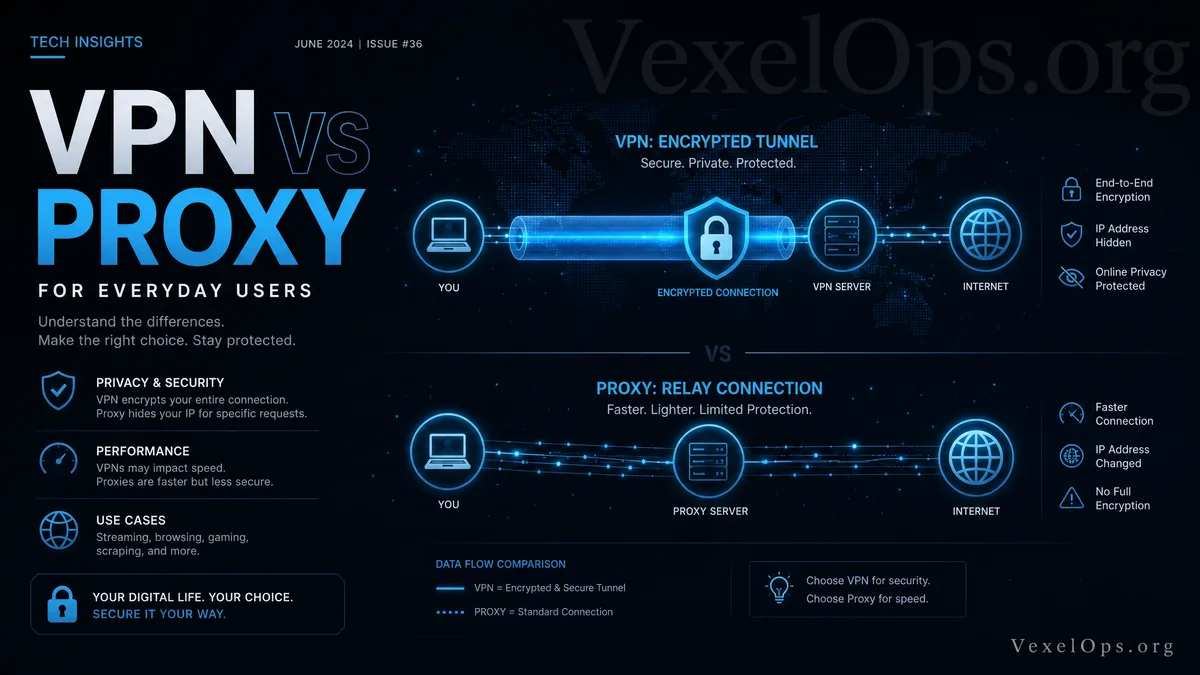
When everyday users start to care about internet privacy, connection security, or regional internet environments, they often come across two terms: VPN and Proxy. Many people understand them as tools for "changing the location of internet connections" or "making browsing more private," but in reality, VPNs and proxies function differently. In one sentence: A Proxy is like a middleman for certain internet requests; a VPN is like a secure tunnel for all traffic from an entire device or a specific application. This article will not teach you any tricks, misuses, or illegal operations, but will clearly explain the differences, limitations, and how to view VPNs and proxies in everyday internet use.
What is a Proxy?
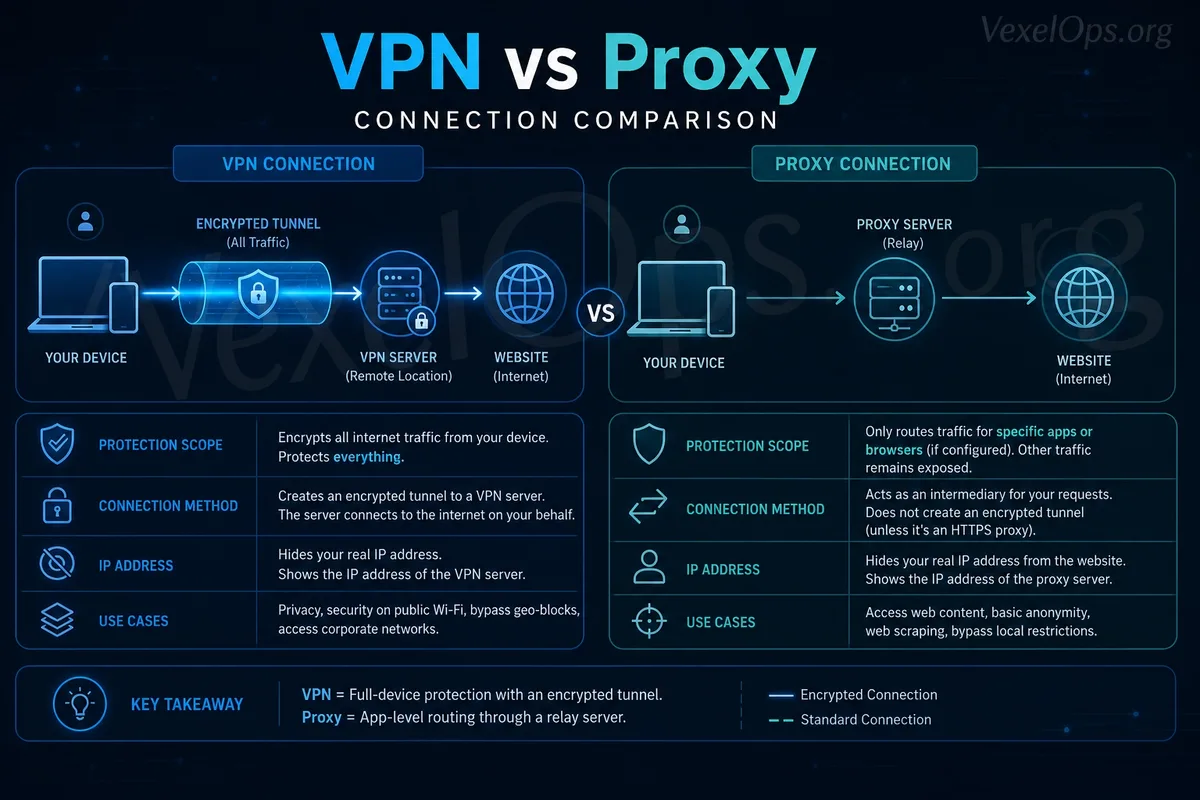
A Proxy can be understood as a "proxy server." When you use a Proxy, some of your internet requests first go to the proxy server, which then makes requests to the target website. From the website's perspective, it may only see the connection information of the proxy server, not your original connection data. Proxies are often found in browser settings, applications, or some network configurations. They can affect specific traffic types, meaning they might only impact a particular browser, software, or type of connection. However, a Proxy might not encrypt all data and does not necessarily secure the entire device’s connection. Different types of proxies have varying purposes and security levels, and casual users should not assume that just because they see the word "Proxy," it is always safe or able to protect their privacy.
What is a VPN?
A VPN, or Virtual Private Network, can be understood by everyday users as an encrypted network tunnel. When you use a VPN, your connection typically first goes through servers provided by the VPN service before reaching the target website or service. This process can reduce risks in certain public network environments, such as when using public Wi-Fi in cafes, hotels, or airports, as VPNs can enhance connection protection. Compared to proxies, VPNs generally aim to secure the overall connection environment. Many VPNs affect all network traffic from the device or at least the traffic of specified apps. For this reason, VPNs are often viewed by regular users as more comprehensive tools for privacy and connection security. However, VPNs are not a panacea. They cannot guarantee that you won't be deceived by phishing websites, and they cannot protect passwords entered on fake sites, nor can they replace good account security habits.
The Main Differences Between VPNs and Proxies
The greatest difference between VPNs and proxies lies in their protection scope, encryption methods, and usage scenarios. Proxies typically act as intermediaries for certain applications or specific traffic. This might be suitable for some technical scenarios, but for everyday users, if they are unaware of the source and settings, they may mistakenly believe they are fully protected. VPNs, on the other hand, generally establish encrypted tunnels, providing a broader scope of protection. For regular internet use, public Wi-Fi, and daily privacy protection, the concept of a VPN is easier to understand and more frequently utilized by everyday users. However, whether VPNs or proxies, neither should be interpreted as "absolute anonymity" or "complete security." They are merely tools, not guarantees of safety. Users still need to pay attention to passwords, two-factor authentication, phishing links, suspicious websites, and personal data protection.
Common Misunderstandings of Using VPNs
Many everyday users believe that simply turning on a VPN means there are no internet risks. This is a common misconception. VPNs can improve certain privacy and public network security issues, but they cannot stop you from actively entering your password on a fake website, nor can they determine whether a particular message is a scam, and they cannot check if your account has two-factor authentication enabled. If you click on a phishing link and enter your account, password, and verification code on a fake login page, a VPN cannot prevent that information from being obtained by the other party. This is why digital security should not rely solely on a single tool, but needs to incorporate risk judgment and basic protective habits.
What Should Users Be Aware of When Using Proxies?
The quality and trustworthiness of proxies can vary widely. Casual users utilizing unknown free proxies might inadvertently increase their risks. Since some of your internet requests will pass through the proxy server, if the service source is untrustworthy, you may face issues like data logging, unstable connectivity, or privacy leaks. Moreover, some proxies only affect specific applications, and do not mean that all traffic from the device is protected. If users do not understand the scope of settings, they may develop a false sense of security. Therefore, casual users should not use unfamiliar proxies recklessly and should not fully trust any tool that claims to "hide identity." Before selecting any internet tool, you should first verify the source, purpose, and trustworthiness.
Under What Circumstances Do Everyday Users Encounter VPNs or Proxies?
Everyday users most commonly encounter VPNs in scenarios such as using public Wi-Fi, traveling for work, wanting to enhance connection privacy, or wishing to protect connectivity in unstable network environments. For those unfamiliar with technology, choosing a trusted, transparent, and stable-rated VPN service is more practical than attempting to set up a complex tool. Proxies are more often seen in application settings, corporate networks, browser settings, or technical uses. Average users do not necessarily need to actively use proxies unless they clearly understand why they need them and whether the service source is trustworthy. Regardless of the chosen tool, you should avoid using unknown services that make exaggerated claims, require installing odd software, or request excessive permissions.
Understanding the Tools Correctly is More Important Than Blind Usage
VPNs and proxies are internet tools, not magic shields. What truly matters is understanding what they can and cannot do. VPNs can help improve certain connection privacy and public network security issues, but cannot identify all scams. Proxies can route specific traffic through a proxy server, but that does not equate to complete encryption or comprehensive protection. For everyday users, the most practical safety concept is: tools are merely aids; fundamental habits are core. You still need to use secure passwords, enable two-factor authentication, avoid clicking suspicious links, refrain from entering sensitive data on unfamiliar sites, and regularly check your account and privacy settings. Understanding the differences between VPNs and proxies can help you choose tools more clearly and avoid being misled by exaggerated promotions. Digital security is not achieved by a single tool but is built up through multiple small habits.